
South Holland Directory Collections
No shelf holds a continuous South Holland city directory run. Newberry Library and the South Suburban Genealogical and Historical Society, known as SSGHS, offer the strongest catalog evidence. Newberry files South Holland beneath Riverdale for several years in the 1920s. SSGHS holds Chicago, Hammond, and Calumet Region books that can catch people whose lives crossed the south suburban area. Save the collection title, year, place label, and page with every find.
| Collection | Confirmed years | Repository | Access route |
|---|---|---|---|
| R.L. Polk Chicago directory | 1923, South Holland in suburban index | Newberry | Online scan |
| South Holland under Riverdale | 1922-1925, 1928-1929 | Newberry | Catalog or reading room |
| Chicago directories | 1871, 1880-1917, 1923, 1928-1929, plus hard-copy runs | SSGHS | On-site |
| Hammond regional directories | Intermittent, 1943-1977 | SSGHS | On-site |
| Calumet phone books | 1946-1951, 1954-1955, 1957-1964, 1966 | SSGHS | On-site |
An absent year does not prove that no volume once existed. It means the inspected holdings did not confirm it. Ask about access, image copies, and indexing under South Holland, Riverdale, Calumet, or Thornton.
South Holland's Riverdale Index
Newberry's directory holdings guide gives the key catalog clue: South Holland is grouped under Riverdale for 1922 through 1925 and again for 1928 and 1929. Its 1924 archival object also says to see Riverdale. That is a filing choice, not proof that a South Holland address stood within Riverdale's limits.
The digitized 1923 Polk volume prints “South Holland, S, 19.5” in its suburban index. That line is a geographic and page pointer, not a ZIP code or resident entry. Follow it into the right name or street section, then cite the actual page.
The 1923 Newberry scan shows how the index is presented.
The image is a route into the city directory, so a person should only be cited after the underlying entry has been read.
South Holland History Room
The South Holland Public Library is the local starting point at 16250 Wausau Avenue. It was established in 1961 and moved into its current building in 1972. Its policy points researchers toward microfilm, reproduction help, the Historical Society, SSGHS, and federal archive resources. Ask about a precise year, newspaper, directory, school, church, photograph, cemetery, or street. No open resident-name database is advertised.
The South Holland Historical Society has a lower-level museum room. Its page lists Saturday access from 1 to 4 and 708-339-8490. Check current hours before travel. A dated question gives staff more to work with than a request for everything about one surname.
The library history page shows the institution that anchors local city directory research.
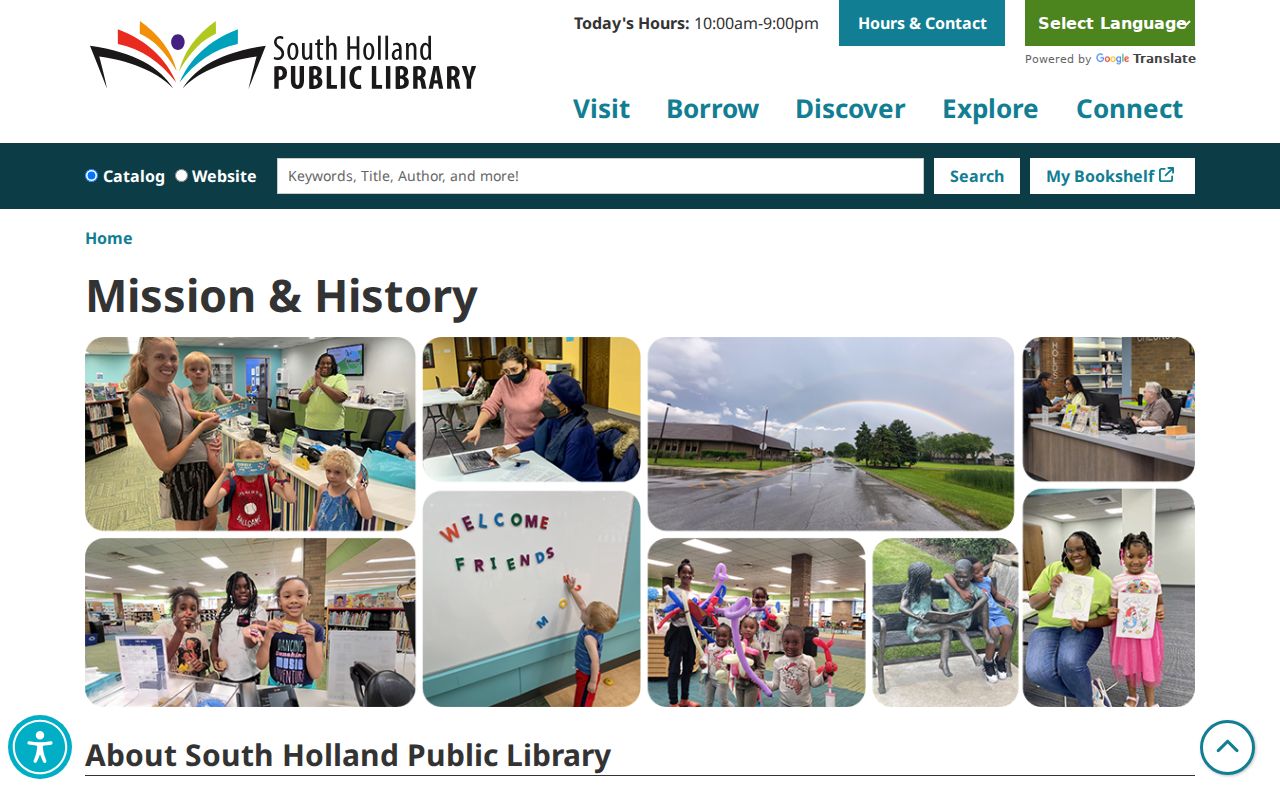
The local room helps when a catalog entry exists but its relevant page is not online.
Read South Holland Directory Entries
A city directory entry is a dated snapshot, not proof of a current home. Read the abbreviation key first. The inspected source did not yield a verified South Holland person-entry image, so no sample name or symbol should be invented. When an entry is found, capture its exact text and context.
| Name | Save spelling, initials, and order as printed. |
|---|---|
| Household note | Save spouse, widow, or relationship terms only if shown. |
| Work line | Copy occupation or business detail with its abbreviation. |
| Address | Preserve number, direction, street, and suffix. |
| Citation | Save title, year, section, page, place label, and repository. |
Arrangement terms explain how a book works.
- Criss-cross directory
- A later book arranged by street address or phone, rather than only by surname.
- Householder index
- A list centered on the named head or listed occupant.
- Abbreviation key
- The volume's legend for short forms, symbols, work terms, and household notes.
South Holland's Regional Shelf
SSGHS reports more than 14,000 books, but that figure is not one huge index. Separate collections have different date spans. The society covers southern Cook County, eastern Will County, and Thornton Township. It holds city directories, phone books, census material, maps, newspapers, obituary cards, funeral-home sources, and local histories.
SSGHS is at 3000 W. 170th Place in Hazel Crest and lists 708-335-3340. Hours vary by weekday and include the first two Saturdays. Confirm them. An obituary request is listed at $5. South Holland Star Tribune microfilm covers 1978-1982, while the South End Reporter covers 1929-1931. Those records may explain why a name disappears.
- Directories tie a printed name to one edition.
- Census schedules give a household snapshot.
- Obituaries may connect relatives, dates, and cemeteries.
- The 1926 Thornton atlas bridges farms to old land geography.
Note: Ask which regional label indexes the material before treating a missing result as a true gap.
Trace South Holland Family History
Use city directories as a chain of dated observations. Start near a known year, then move both ways. A gap may mean a move, death, unlisted home, missed volume, or different regional heading. One source cannot choose among them.
- Search the surname and variants in the nearest confirmed year.
- Copy the full entry, page, key, address, and place label.
- Check the prior and next surviving city directories for changes.
- Pair the year with released federal or Illinois census schedules.
- Test a disappearance with an obituary, newspaper, cemetery source, or vital index.
- Keep citations separate so another researcher can retrace the work.
For a newer identity check, use an official current roll. The one-name method appears on the South Holland resident lookup page. Never treat an old phone number as current.
Map South Holland Directory Addresses
The Chicago Public Library's Sanborn index points to South Holland coverage for 1897 and 1911 through August 1950. A sheet can show footprint, material, floors, use, numbering, and fire details. It does not name every occupant. Pair it with a directory, deed, census, or paper.
The indexed map references appear in the library guide.
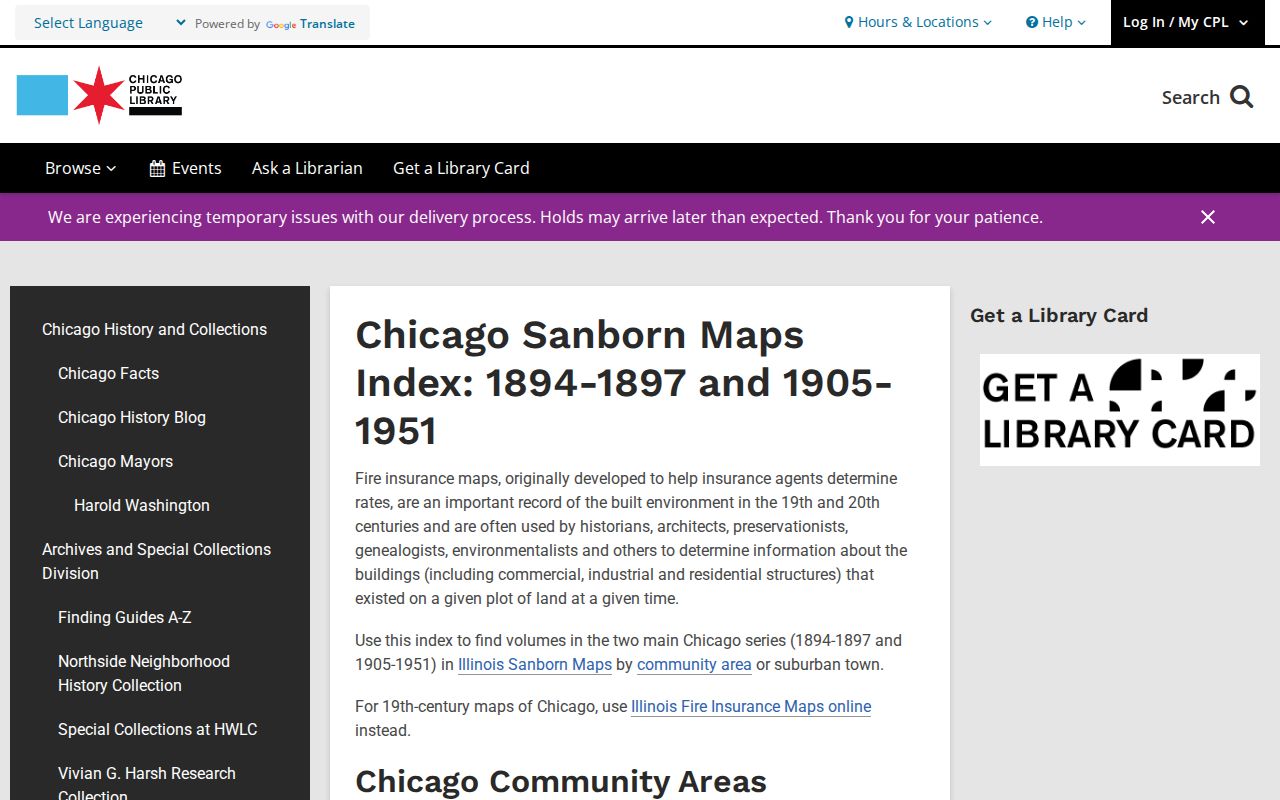
These years can date a building change even when no directory survives for that date.
| Period | Research milestone |
|---|---|
| 1847 | Dutch settlement begins near the Calumet River. |
| 1894 | South Holland incorporates. |
| 1897 | First confirmed local Sanborn reference. |
| 1922-1929 | Confirmed Newberry directory years, with gaps. |
| 1961-1973 | Library opens, moves, then hosts SSGHS. |
South Holland Calumet Records
The Calumet Region Community Collection spans 1850-2021 and includes South Holland, Dolton, Riverdale, Roseland, Pullman, and West Pullman. Its 546 photos, business and church files, school material, scrapbooks, biographies, and histories can add context to a directory find.
The collection page presents an archive, not a live resident list.
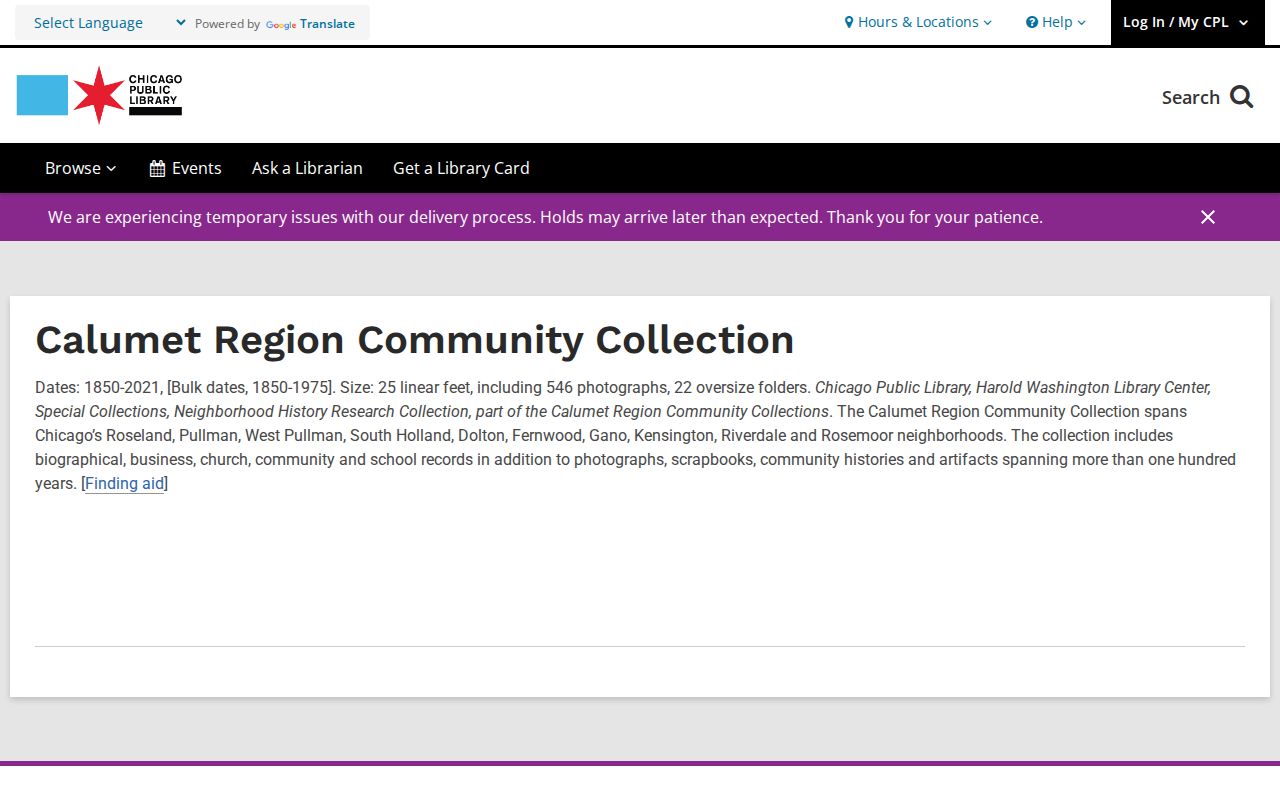
Ask with a precise name, date, group, school, church, or address. South Holland's Dutch-settler origin and “Onion Set Capital” history explain why farm maps, township sources, and regional business lists can matter. Riverdale, Thornton, and Calumet are valid search routes.
Escalate South Holland Directory Gaps
When the shelf ends, use the Illinois State Archives databases, Cook County IRAD, and Illinois State Library genealogy room. They cover old vital indexes, probate, naturalization, census, county histories, maps, and record-group guidance. Staff provide access, not a full research project.
Cook County began in 1831. The 1871 Chicago Fire destroyed some early records, but not all series. IRAD describes surviving and reconstructed sources, including the Fink marriage index effort for 1833-1871. Say a record was not found in the inspected source. Do not claim it never existed.
IRAD identifies Cook County birth-index material for 1871-1916, naturalization files from 1867-1929, and probate indexes and records beginning in 1871. Those dates describe record groups, not a promise that every South Holland person appears. Search the archive catalog first, then ask which repository holds the volume, roll, or index. A probate file may connect heirs. A naturalization record may establish an earlier home or origin. Each should remain separate from the directory citation that led to it.
The Illinois State Library genealogy room offers federal census material for 1830-1880 and 1900-1930, county histories, atlases, and Soundex or Miracode finding tools. Its published self-service hours are weekdays from 8 to 4:30. Confirm them before travel. Staff can point to a source but do not complete a full family project. Bring a surname, date range, South Holland or Thornton place label, and the exact volume already checked.
Village records form another layer. The South Holland Village Clerk keeps minutes, ordinances, resolutions, reports, and local request functions, while county offices keep deeds, vital records, elections, and many court records. Municipal minutes may identify a public action or dated civic role, but they do not replace a household entry. Match the request to the office that created the record.
A catalog record proves a collection exists. A claim about a person requires the actual entry.