
South Holland Neighbor Sources
No official source is a full block resident list. Each one answers a smaller question about South Holland neighbors, parcels, registration, or civic life.
| Source | What it shows about a block | Access |
|---|---|---|
| CookViewer 3.1 | Parcel shapes, PINs, layers, comparison, and map reports | Free public map |
| Assessor and Tax Portal | Parcel, taxpayer, mailing, value, and tax facts | Free address or PIN search |
| Illinois voter lookup | One known person's registration and polling details | Exact identifiers required |
| Neighborhood Groups Committee | Public organizing contact and meeting information | Village page and public contact |
| Historical collections | Older address, building, household, and news snapshots | Libraries and archives |
An owner name or tax mailing address does not establish who occupies a house. Even a homestead exemption relates to a tax year and is not proof of every household member.
Map South Holland Neighbors
CookViewer 3.1 is the best public tool for seeing which parcels truly adjoin one South Holland address. Search by parcel address, intersection, or a 10- or 14-digit PIN. Condominiums may return several matches, so inspect the parcel panel before selecting nearby lots.
- Locate the subject address and save its PIN.
- Turn on the parcel layer and record its map date.
- Use Select Multiple or click each parcel that shares a line with it.
- Save adjacent PINs, then inspect each Assessor record separately.
- Use Compare, Measure, or Print PDF for research notes, not as a legal survey.
For the entire named road rather than the immediate block, move to the South Holland street directory.
South Holland Owners and Occupants
Cook County parcel tools may show an owner or taxpayer, a mailing address, the situs address, property class, assessed value, exemptions, and building or lot facts. Situs means the physical parcel address. The mailing address is where a tax notice goes. Neither field lists all South Holland neighbors who live inside.
A deed confirms a recorded transfer, not present occupancy. The tax record can lead to a deed summary, while the Clerk's recording index provides the legal instrument. If the inquiry is merely which lots touch, stay with the map. If title matters, confirm the deed. If a current household is the question, accept that no public county roster fills the gap.
Evidence rule. Parcel adjacency, ownership, mailing address, and occupancy are four separate claims and need separate support.
South Holland Neighborhood Groups
The Village's Neighborhood Groups Committee helps residents organize block parties, meet nearby households, and improve communication. The source page appears below.
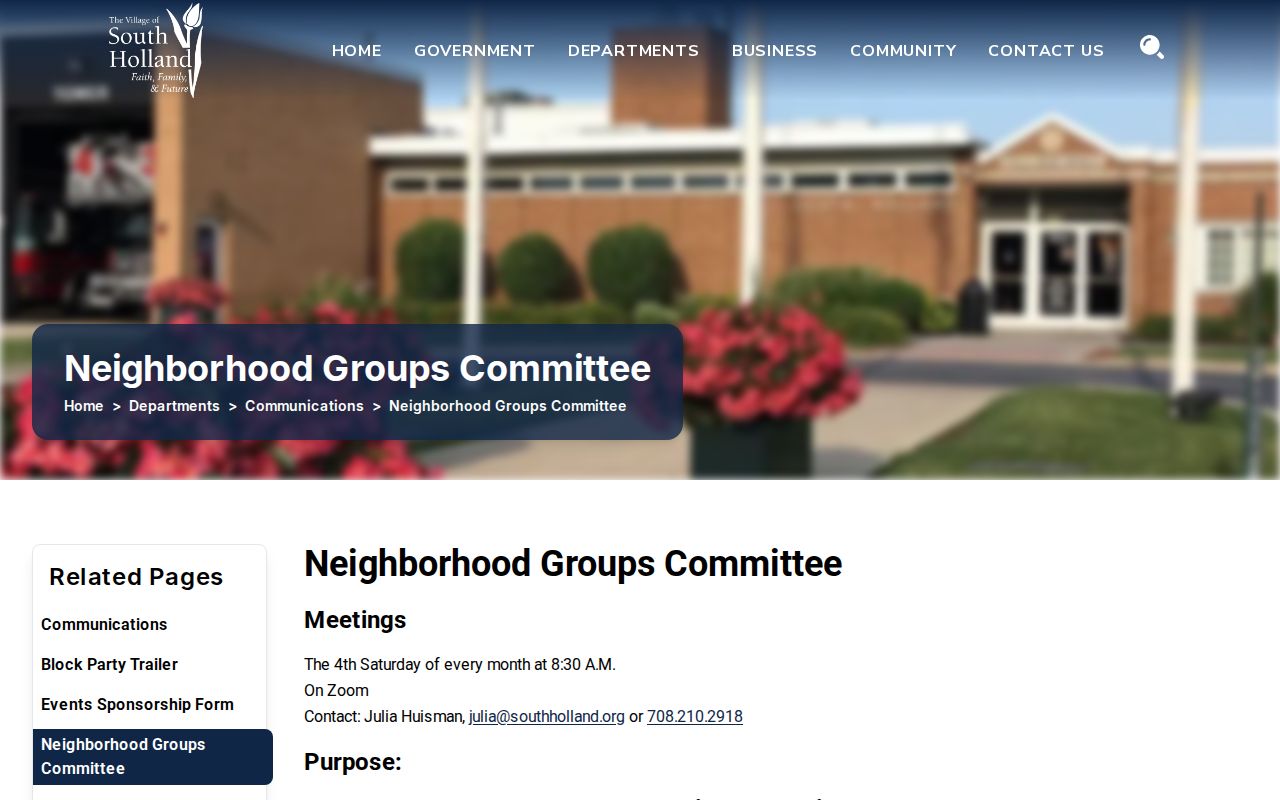
The committee meets by Zoom on the fourth Saturday at 8:30 a.m., according to the researched page, with Julia Huisman named as contact. No public block membership or address directory was found. Ask about the group serving an area, not for a private roster.
The broader Village organizations list is another civic contact route.
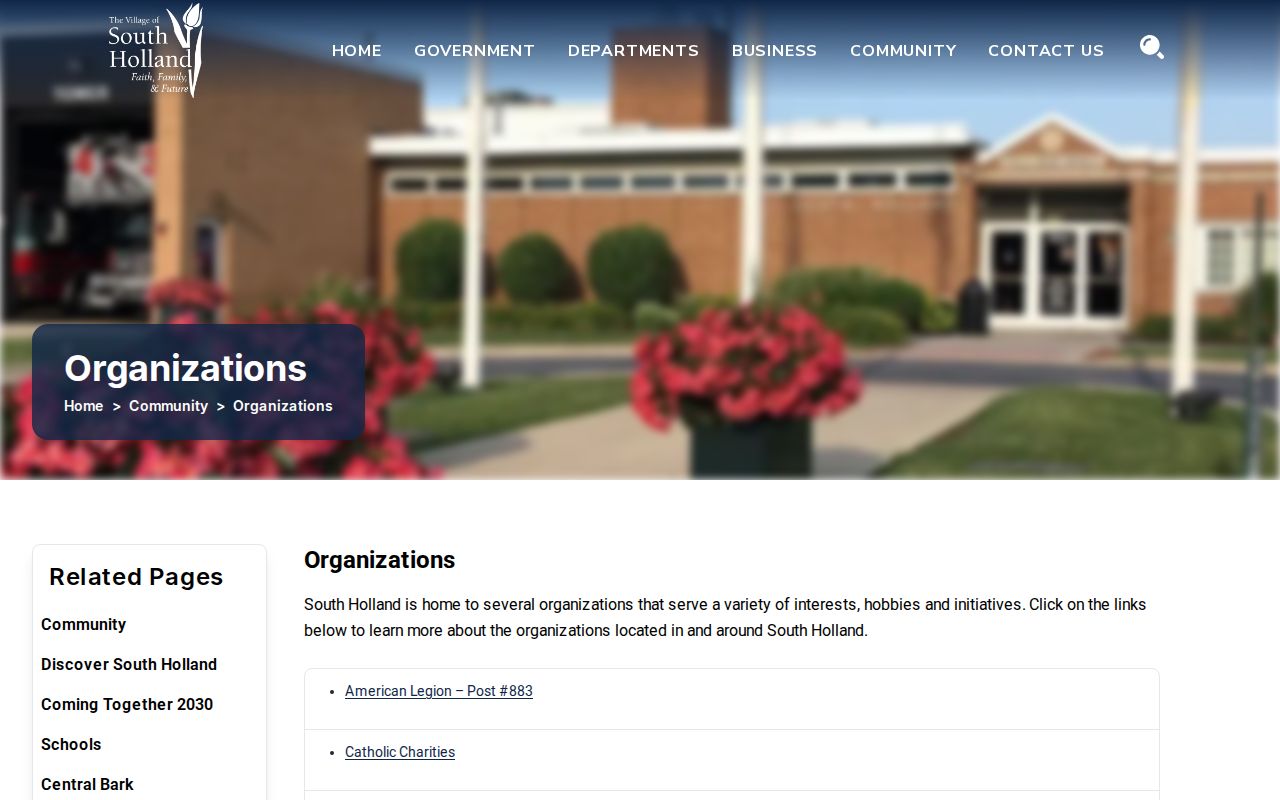
Its historical, service, veterans, business, music, garden, and faith-related contacts can lead to public programs or anniversary records. A listed group is not proof that any South Holland neighbor belongs to it.
South Holland Civic Meeting Trail
Public agendas and minutes can show block projects, hearings, ordinances, and civic contacts without exposing a private household list. The Village agenda and minutes archive is shown below.
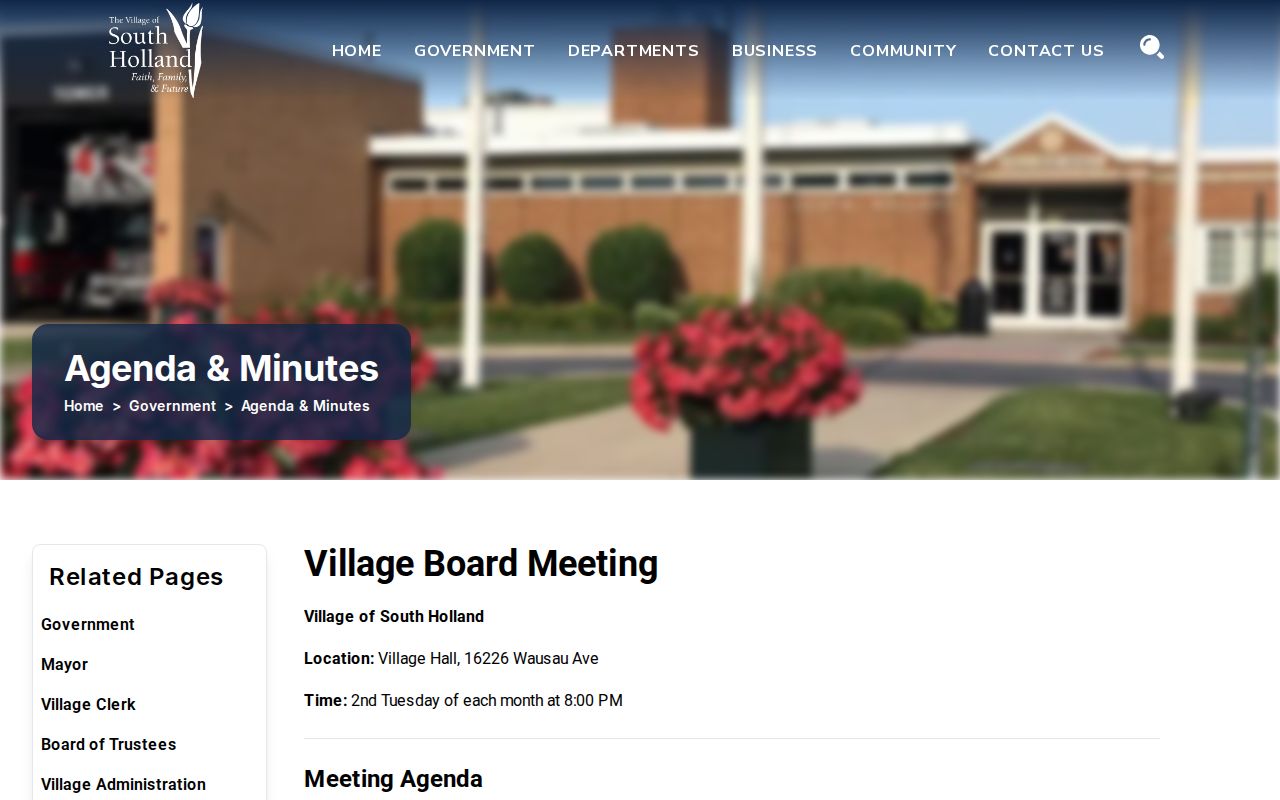
Search by a street, project, board, or date. A person named in a public comment or petition appears in that event's record only. It does not establish residence or group membership beyond what the record states.
South Holland is known as a “Community of Churches,” and the local organization list names many civic groups. Public programs, newsletters, and minutes can supply neighborhood history. They should be used as dated civic evidence, not as a way to infer private ties.
Historical South Holland Neighbors
An older block calls for dated sources. Newberry lists South Holland directories under Riverdale for 1922 through 1925 and 1928 through 1929. SSGHS has regional directories, phone books, census schedules, maps, newspapers, and obituary files. Chicago Public Library's Sanborn index points to local building-map references for 1897 and 1911 through August 1950.
Start with the old address and year, but also save the current PIN and legal description. Use a directory for names at a dated address, census for a household snapshot, Sanborn for the building footprint, and newspapers for events. Do not treat a landowner on the 1926 Thornton atlas as an occupant without a second source.
South Holland's numbered streets, plus State Street, South Park Avenue, Wausau Avenue, Paxton Avenue, and Woodlawn Avenue, are useful search checks. Preserve direction and suffix.
Official Rolls Versus Neighbor Tools
Official records identify their custodian, fields, date, and legal limits. Commercial neighbor tools may merge old addresses, inferred relatives, and reused phone data without showing how a claim was made. They may also charge for details that are outdated or available from a public office.
| Point | Official South Holland route | Commercial category |
|---|---|---|
| Source | Named Village, county, or state custodian | Often merged from many feeds |
| Best use | Parcel, deed, civic, or one-voter fact | Possible lead requiring verification |
| Date | Record or map date can be saved | Update timing may be unclear |
| Correction | Custodian process applies | Separate privacy request may be needed |
Use the official record whenever it answers the question. A search result should never be used to confront, follow, or expose South Holland neighbors.
Illinois Voter Block Limits
The public Illinois voter-data page explains controlled access to computerized voter data.
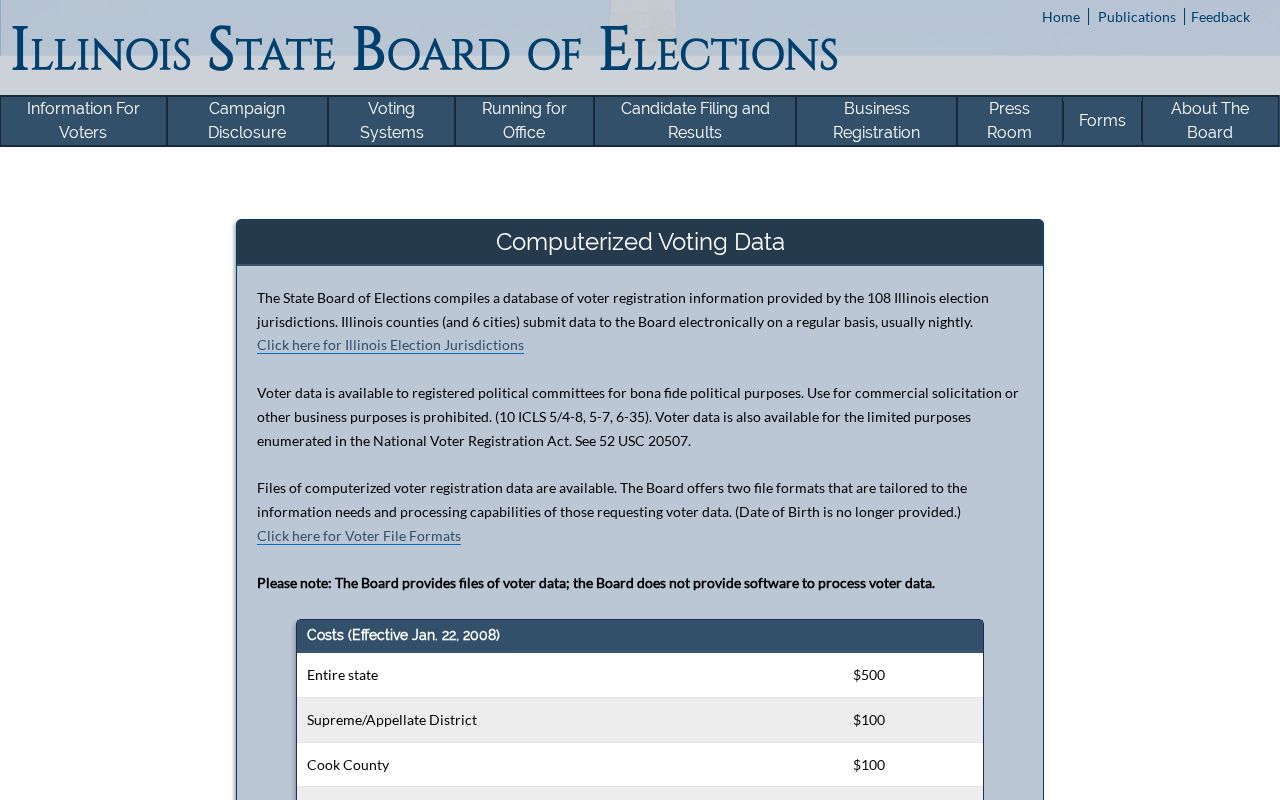
The full file is not an open South Holland neighbor directory. Access is limited to registered political committees and specified statutory uses, and commercial solicitation is barred. The public lookup requires a known person's name, birth date, ZIP, street number, and street name, then returns that person's registration and polling details.
There is no verified public utility, delivery, emergency-response, renter, or complete occupant roster for a South Holland block. When the official screen requires exact facts, do not work around that safeguard.
Protect South Holland Neighbors
The Illinois Address Confidentiality Program offers qualifying survivors and eligible household members a substitute address for new state and local records.
The program protects voter registration and vote-by-mail materials, but it does not remove existing records and currently cannot ensure confidentiality in property records. Never use GIS, deed, or tax data to reconstruct a protected person's real address.
Lawful use. Learn about South Holland neighbors for civic contact, local history, or personal safety. Do not watch, threaten, harass, or expose anyone.
Keep only the facts needed for the task. Record the source date, correct errors with the custodian, and leave private household details private.
Check South Holland Block Boundaries
A block is useful for research, but it is not a legal parcel definition. CookViewer helps identify adjoining lots, roads, districts, and layers. Its Measure tool estimates distance and area. None of those controls replaces a recorded plat, deed legal description, or professional survey when an exact boundary matters.
Save the map date and layer name with each PDF. CookViewer includes archived parcel views for 2010 through 2025. The county's 2025 CookViewer 3.1 update added mobile access, Spanish, compare, multiple selection, measurement, and PDF output. Check live controls before repeating old instructions.
Postal and civic labels also need care. ZIP 60473 is the confirmed South Holland postal code, while the Assessor uses Thornton Township and legal instruments sit with Cook County. A postal city does not set the Village line. Historic catalogs may place South Holland under Riverdale.
If a neighbors question turns on municipal limits, confirm an official layer. If it turns on title, inspect the deed or plat. For a public project, search Village minutes. For old context, request a dated map, directory, photograph, or newspaper. Stop when the record cannot support a stronger claim.